Nutrition and Stroke Recovery

Nutrition and Stroke Recovery

After a stroke, looking after your health becomes more important than ever – and a balanced diet plays a key role in rebuilding strength and supporting recovery. While this journey can bring challenges, such as changes to taste and smell or difficulties with swallowing, it can also be a time of rediscovery.

Eating and drinking become more than just daily habits; they turn into a sensory experience, where new flavours, preferences, and textures are explored. What may feel difficult at first can, over time, become easier with the right support, patience, and small, positive steps forward.

Learning ways to adapt meals can help. The Stroke Association recommend the following tips to maintain a healthy diet:

  • Aim for at least five portions of fruit and vegetables daily.
  • Make starchy foods a third of your meals.
  • Reduce processed meats and takeaways.
  • Limit salt to 1 teaspoon per day, including hidden sources.
  • Include daily protein from oily fish, beans, pulses, nuts and seeds.
  • Stay hydrated for optimal bodily function.

Download their full guide for other practical tips to stay nourished and hydrated.

Of course, even when staying healthy, everybody deserves a sweet treat once in a while and that why at all of our meetups we provide tea, coffee and cookies! We meet every third Tuesday, April 2pm – 3:30pm at Forest Community Centre, Bordon. It’s a great opportunity to meet with like-mind individuals who understand what you are going through. Come along, have a chat, get stuck into some activities, or sit and have a cup of tea – it’s up to you. We know that stroke recovery is hard, but even though it may feel like it at times, you are never alone, we are here for you.

Stroke Fatigue

In January we had a visit by Jo O’Shea from Hobbs Rehabilitation, telling us about the issue of fatigue.

Jo explained the issues of Fatigue really well and provided us with a lot to think about. The main takeaway from the talk was the 3 P’s:

  • Pace: Break tasks into smaller steps and take regular, planned rests before you feel exhausted, even for gentle activities like talking or eating. Alternate positions and adopt a “little and often” approach to build stamina gradually. 
  • Plan: Spread activities out over the day or week, scheduling them for times when you have more energy. Organise your environment to keep needed items close and consider helpful equipment. 
  • Prioritise: Decide which tasks are most important and which can be delegated, delayed, or dropped. Don’t try to do everything; focus on what truly matters and balance necessary tasks with enjoyable ones. 

To find out more about Hobbs Rehabilitation then follow this link https://hobbsrehabilitation.co.uk/liss/or to get more information about their ‘Live Better with Fatigue’ course, follow this link https://hobbsrehabilitation.co.uk/exercise-group/live-better-with-fatigue-liss/

You can also contact Chime Carlin, Social Prescriber for Badgerswood Surgery, Forest Surgery & Pinehill Surgery by emailing chime.carlin@nhs.net to see what help is available through the NHS.

The Watercress Line

It was great to have Dan from the Watercress Line come to the Forest Centre in October and give an enlightening talk on the Heritage Railway and for bringing in some bygone rail items for us to look at PLUS the smells of a railway – coal, engine oil, station platform !!!!

I think we all learned a little bit more about steam trains by the end.

A special mention must go out to our member Rainer, who came resplendent in his Watercress Line baseball cap 😃

Please visit the railways website for more information on the line and upcoming events – www.watercressline.co.uk

The Mary Rose

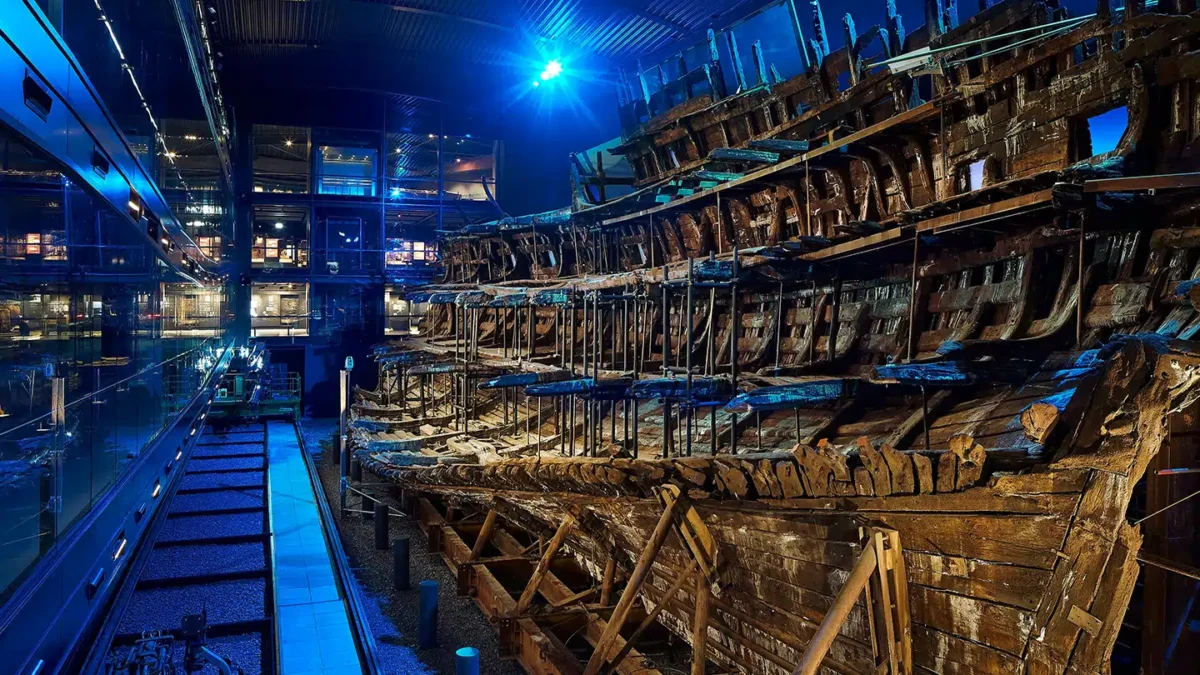
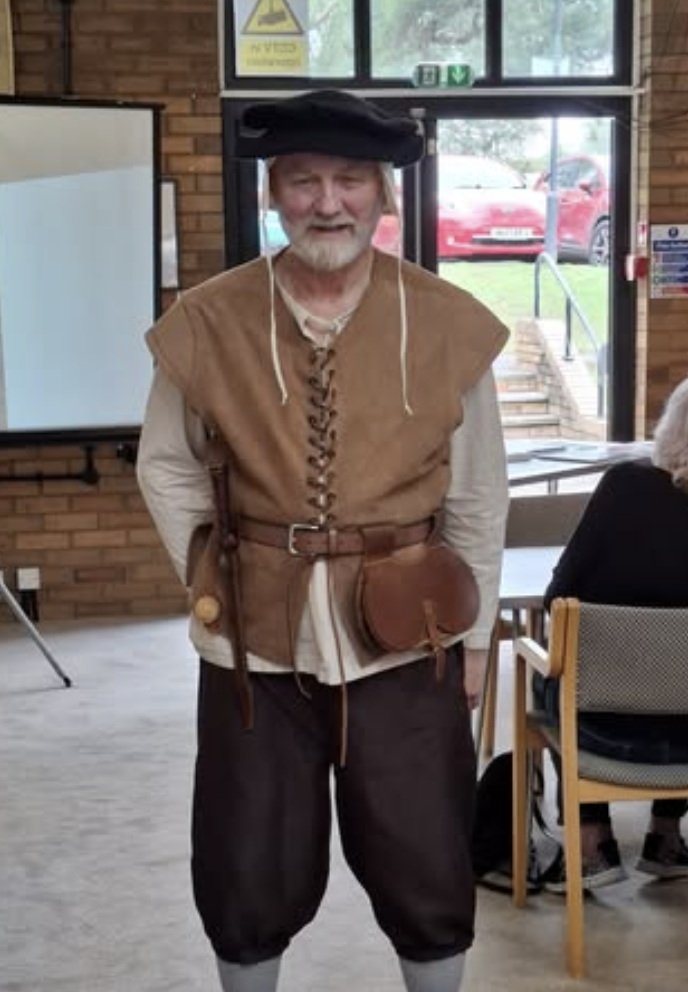
Steve Adams , a volunteer in the Whitehill & Bordon Group, gave a brilliant talk on The Mary Rose ship, resplendent in full costume!! Here is a summary of Steve’s talk.

man in mary rose style clothing

Being a volunteer at The Mary Rose Museum in Portsmouth Historic Dockyard gives me immense satisfaction – but being a costumed volunteer – dressed as a 16th Century Tudor sailor – brings a whole new meaning to engaging the public!

King Henry VIII’s flagship sank in the Solent in 1545. Her story from rediscovery on the seabed, to a global television audience of 60 million people watching her being raised, to the ship itself and over 4,000 artifacts of the 19,500 recovered being on show to the public is truly a remarkable story.

The ‘time capsule’ discovered when she was found again in 1971 has lead to the discovery of many ‘lost’ and ‘unknown’ items from Tudor life – for example, prior to her rediscovery, there was only 1 known Tudor longbow in the world and we now have over 170. The remains of the ships dog were found on board – he was there to catch rats and mice as the Pope at the time deemed cats unholy, unclean, bad luck and were associated with witches so you didn’t have a cat on board your ship!

Of the 180+ human remains that were found, DNA analysis on a small number shows that there was a black African, a mixed race Moroccan, a man with Italian heritage and also one most likely from Spain. This lends itself nicely to the theory that as there was no conscripted Army or Navy at that time, these men were mercenaries fighting for whoever was paying them the most money.

How did she sink? Despite an introductory film as you enter the museum, it’s the first question a lot of visitors ask the volunteers when they enter the ships deck! Outrageous theories are put to us by many “ The crew only spoke Spanish therefore didn’t understand orders” “ The crew all rushed to one side to get a sight of the King as he was standing at Southsea Castle” “ The French sank her” and finally, “ So she sank on her maiden voyage”

None of the above are true! She sank after firing the cannon on the starboard side (the side facing the French fleet) then on turning to fire the portside cannon – with the starboard side gun lids still open, hit enough wind and wave to tip the ship and allow water into the open Starboard gun ports thus causing her to sink. And, by the way, she had been in service for 34 years so definitely not her maiden voyage!

The rest of her story, as they say. Is history and to get the complete picture – together with the sights and sounds of 19th July 1545, I strongly suggest you visit the dockyard and spend a few hours in the museum – you never know, I may be walking the decks that day!

Please visit www.maryrose.org for more information.

Hampshire Hawk Walks Talk

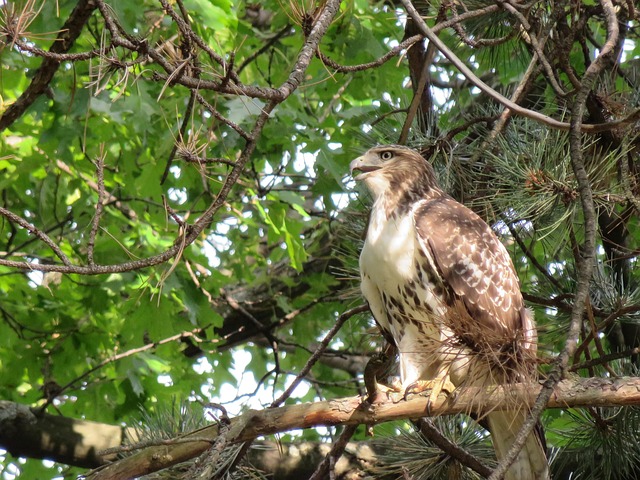
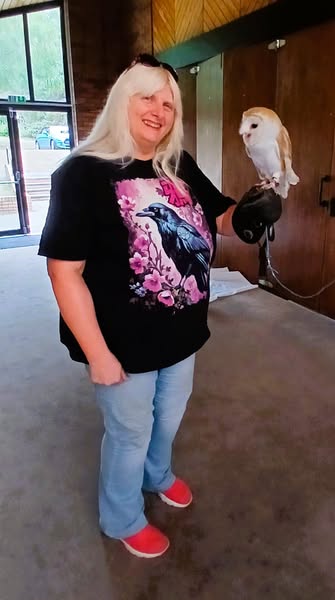
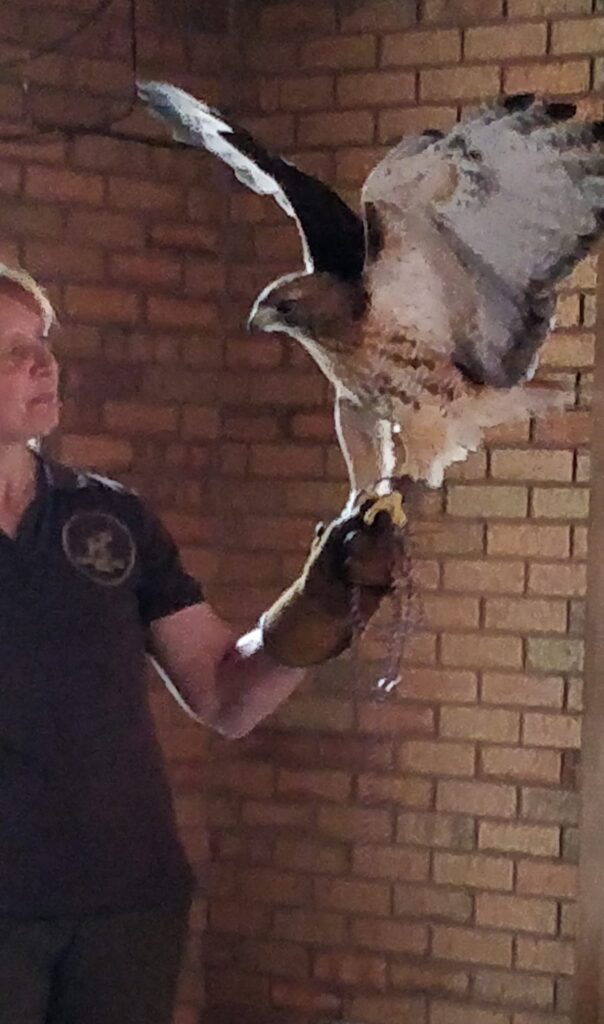
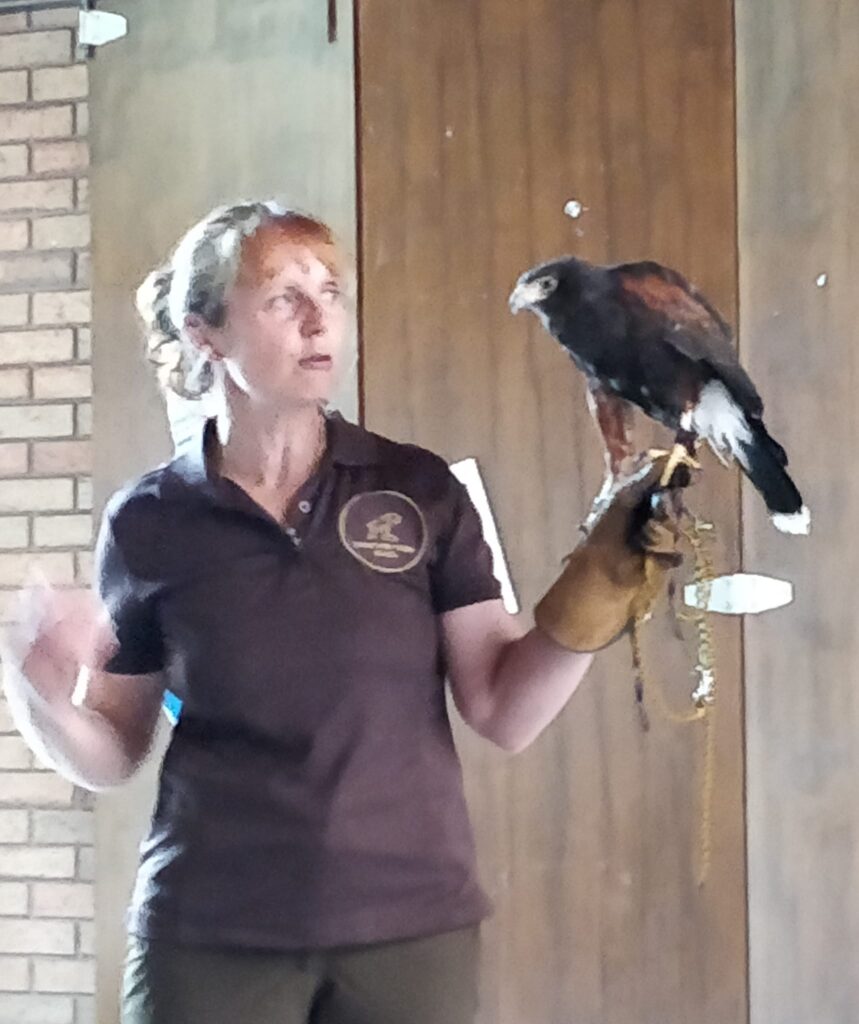
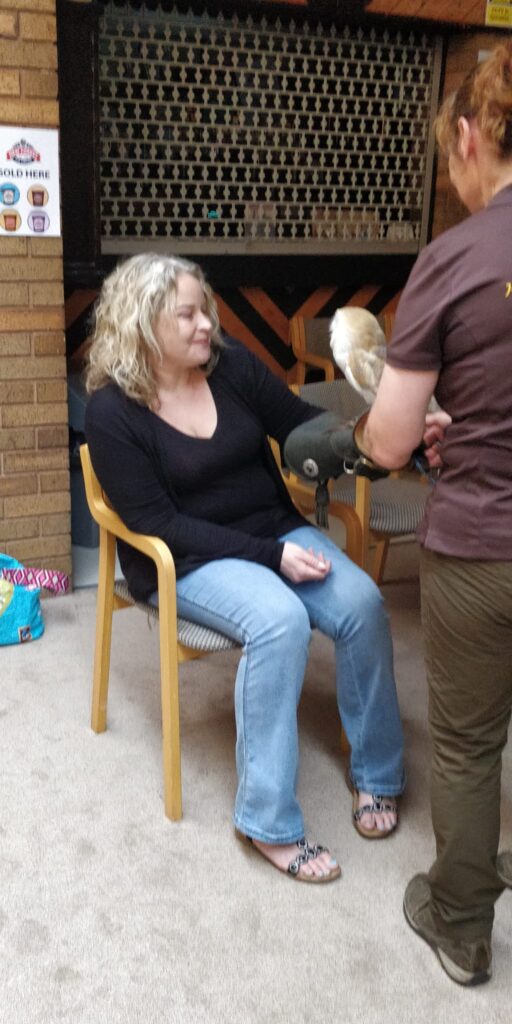
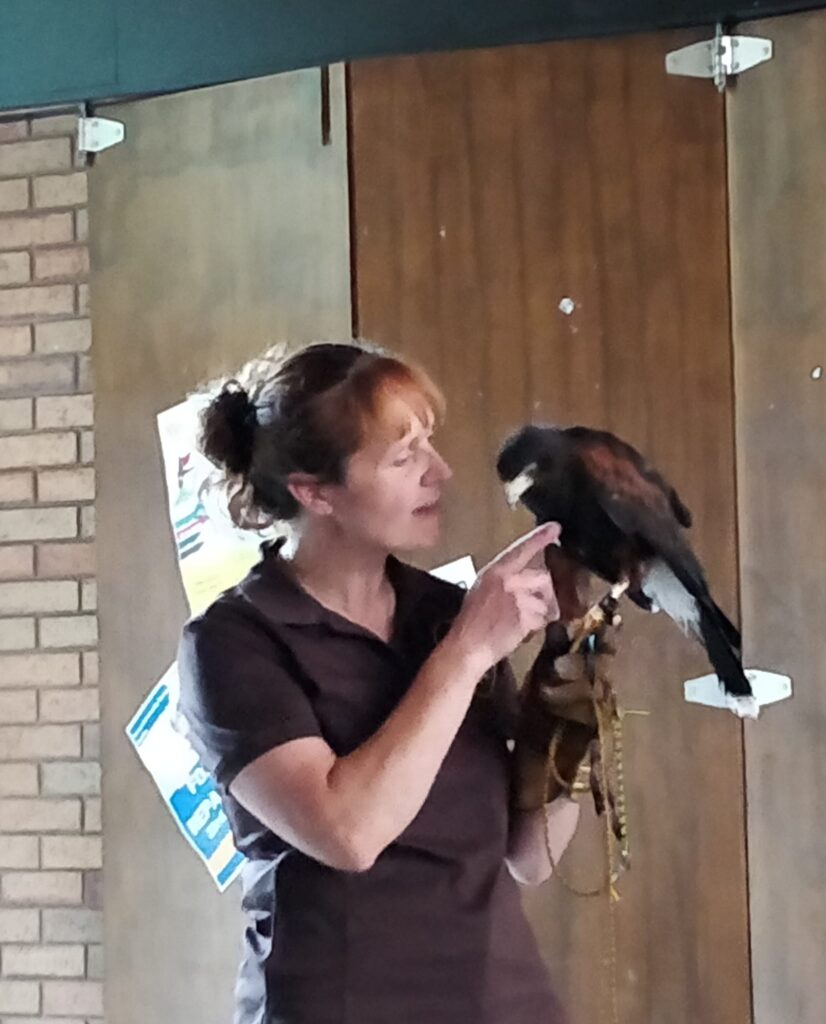
We had an amazing talk and show from Nita Ebdon of Hampshire Hawk Walks, when she brought in Texas a Red Tailed Buzzard, London a Harris Hawk, Wilfred a Barn Owl and Dougal a Kestrel.

Nita told us all about the characteristics of each bird, including some amazing “I never knew that” bird facts and best of all, the chance to handle Wilfred the Barn Owl!

The experience of walking in the woods with these birds is too good to miss, so please visit www.hampshirehawkwalks.co.uk for further information.